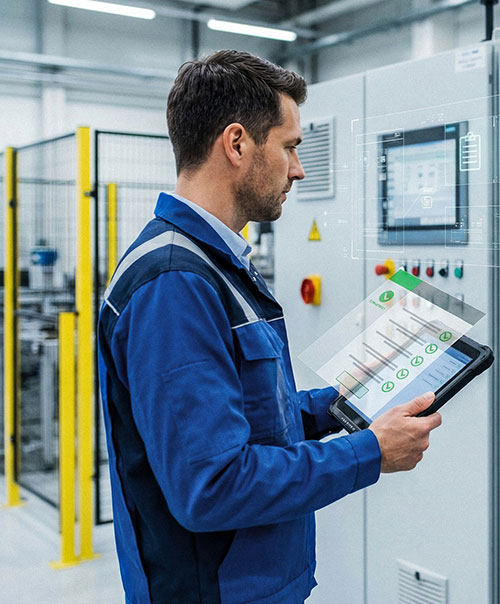
Safety Design and Detailed Engineering Project (PTI)
Design of machinery safety devices and protective systems
Without a technical project, every safety intervention is an approximation
The Detailed Engineering Project (PTI) for safety adaptation is a structured activity that comprehensively and precisely defines all the interventions required to make machinery and process lines safe.
It includes the design of safety devices and the associated technical solutions, with the aim of ensuring regulatory compliance, correct integration into the plant, and continuity of production.
The project provides the operational basis for carrying out safety retrofit work and for the coherent coordination of mechanical, electrical and automation activities.
When is it needed
The detailed engineering project is required in the following cases:
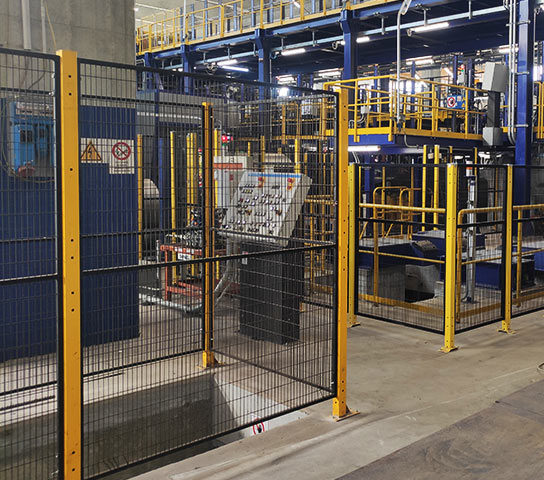
- Safety adaptation of existing machines or plant;
- Functional or production modifications affecting safety systems;
- Process line retrofitting or machine revamping;
- Integration of new mechanical and electronic protective devices;
- Upgrading of control systems and safe-stop functions;
- Preparation of interventions for compliance with applicable safety standards.
How the activity is carried out
The activity is developed through a structured pre-engineering phase and comprises:
- Preliminary analysis of the machine or line and on-site technical surveys;
- Definition of the most appropriate safety solutions — mechanical, electrical, pneumatic and hydraulic;
- Design of safe-stop systems based on the safety PLC and existing automation;
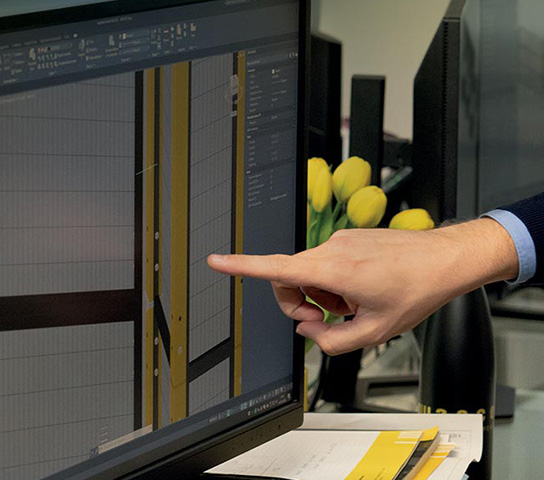
- Development of drawings for guards and protective devices;
- Preparation of electrical, pneumatic and hydraulic diagrams;
- Sharing and validation of solutions with the client's personnel.
What we deliver
At the end of the activity, we deliver a complete detailed engineering package, which includes:
- Drawings of all protective devices and guards;
- Updated electrical, pneumatic and hydraulic diagrams;
- Process documentation and description of safety functions;
- Safety PLC software and logic;
- Operational guidance for installation and implementation of the interventions.