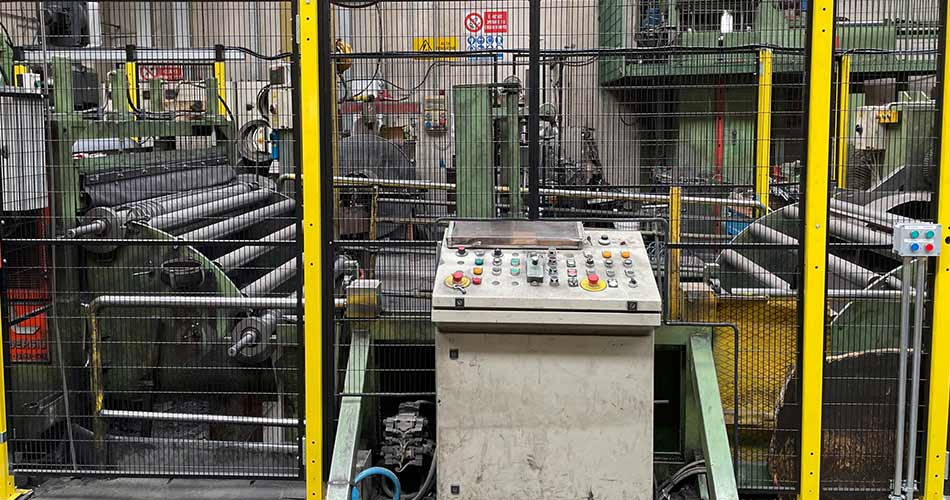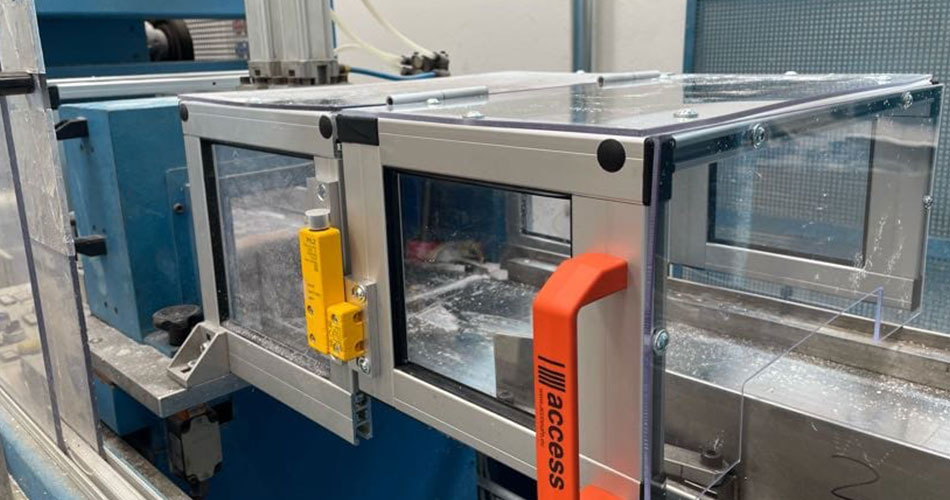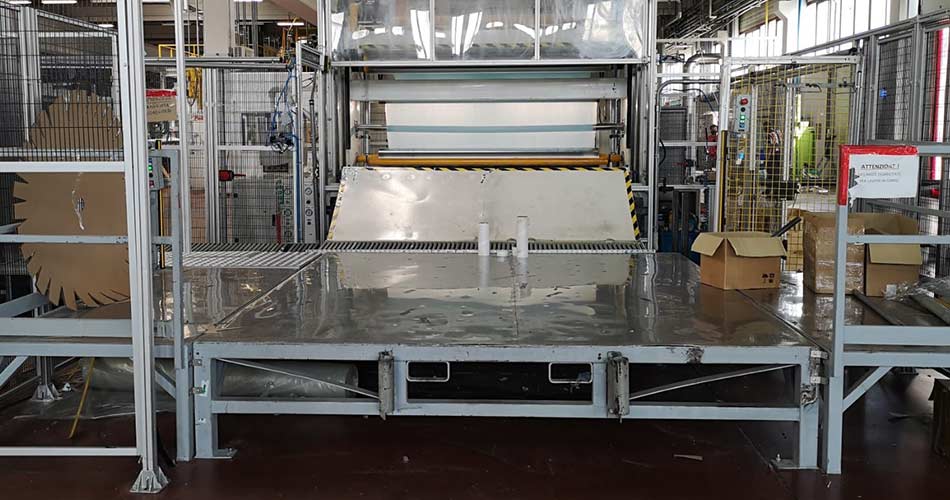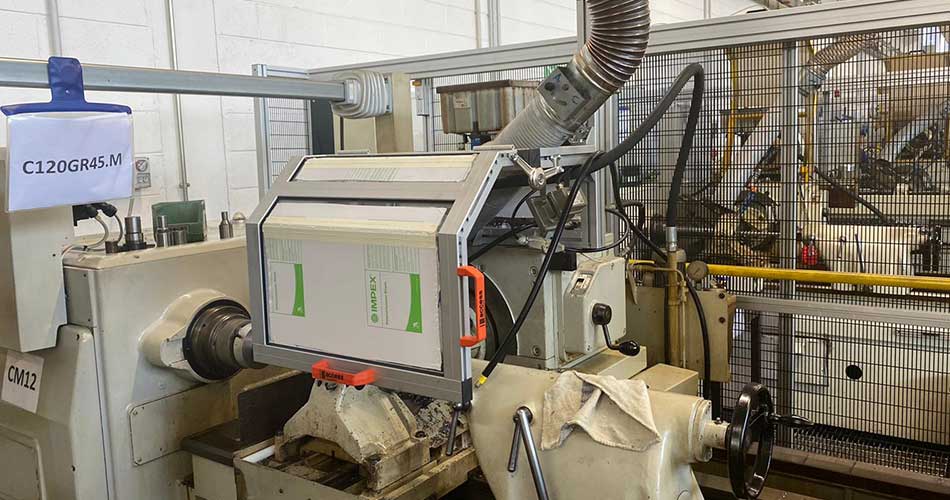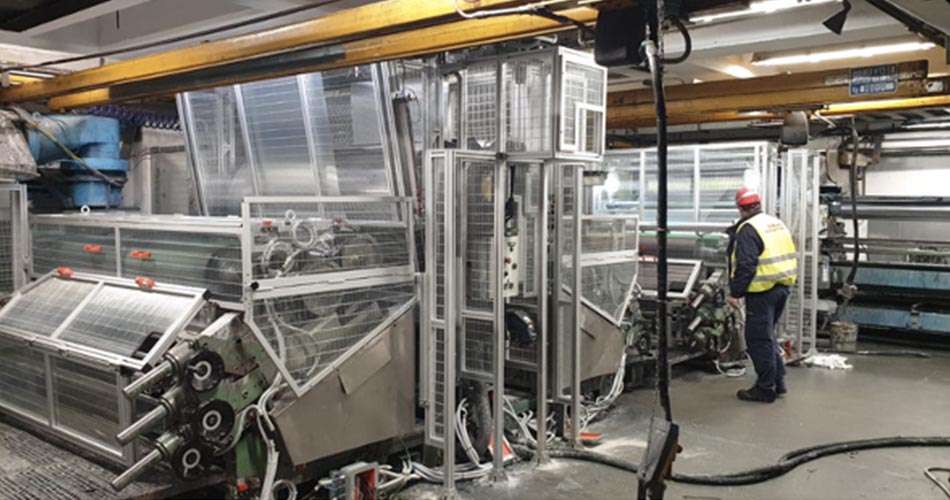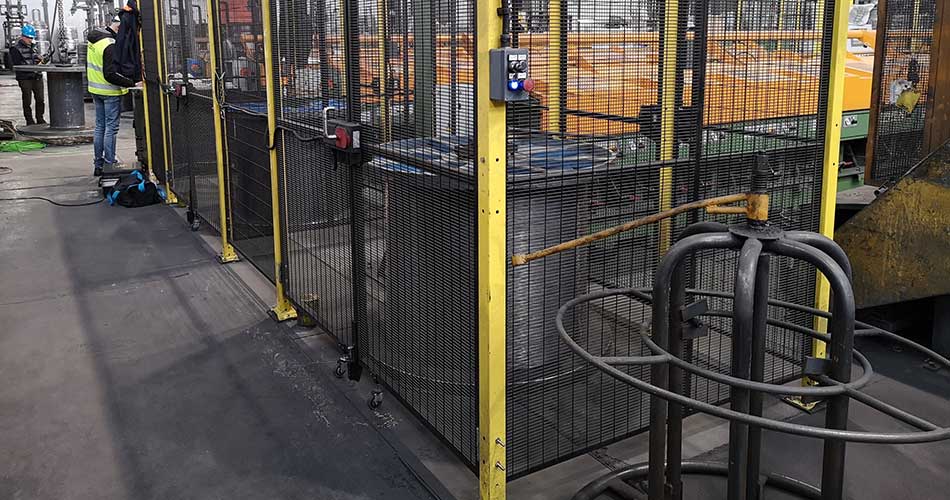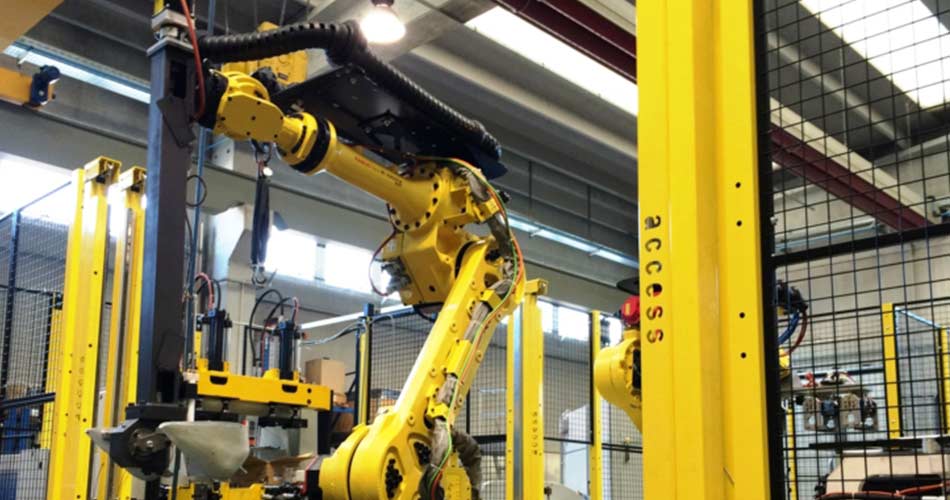
160 metros cuadrados de protecciones perimetrales Accessafe para la seguridad de una línea de producción de pistones.
El ciclo de trabajo empieza con la fusión del material primario, una aleación de aluminio, y la obtención de las piezas en bruto que hay que acabar, quitando el material sobrante y puliendo las superficies; tras esta fase, los pistones pasan a un centro de control de calidad donde se comprueban las tolerancias dimensionales en centésimas y, a continuación, se distribuyen las piezas en contenedores para su transporte.
Las operaciones se llevan a cabo con la ayuda de 4 robots antropomórficos Fanuc (2 de 100 kg de capacidad en el brazo [colada y descarga] y 2 de 165 kg de capacidad en el brazo [corte y medición]) que se encargan de mover las piezas hacia y desde las estaciones de trabajo.
Tras analizar las especificaciones técnicas y los requisitos relacionados con el entorno de trabajo al que va destinada la instalación, el departamento técnico de Accessafe te pidió que indicaras tus preferencias en cuanto a las especificaciones funcionales de la máquina, la geometría de las protecciones, los colores y los sistemas de enclavamiento asociados a los resguardos.
Accessafe ha seguido la metodología de trabajo de la Directiva de Máquinas 42/2006, incorporando el análisis de riesgos y los RES relacionados con la protección perimetral, y ha comprobado su compatibilidad con los requisitos normativos, empezando por las normas de tipo C y continuando con las de tipo B:
- Tipo C UNI EN ISO 10218: Requisitos de seguridad para robots industriales
- Tipo B UNI EN ISO 12100: Seguridad de las máquinas: conceptos fundamentales y principios generales de diseño
- Tipo B según la norma UNI EN ISO 14120: Requisitos de diseño de los dispositivos de protección
- Tipo B UNI EN ISO 13857: Distancias de seguridad para evitar que las extremidades superiores e inferiores alcancen zonas peligrosas
- Tipo B según la norma UNI EN ISO 13849: Elementos de seguridad de los sistemas de control de las máquinas
El proyecto que hemos diseñado es totalmente especial, ya que solo permite usar un número limitado de elementos estándar del catálogo, teniendo en cuenta los riesgos derivados de la velocidad de movimiento y la posible expulsión de piezas desde el interior del área de trabajo, así como la necesidad de mantener algunas zonas semilibres destinadas a la carga y descarga.
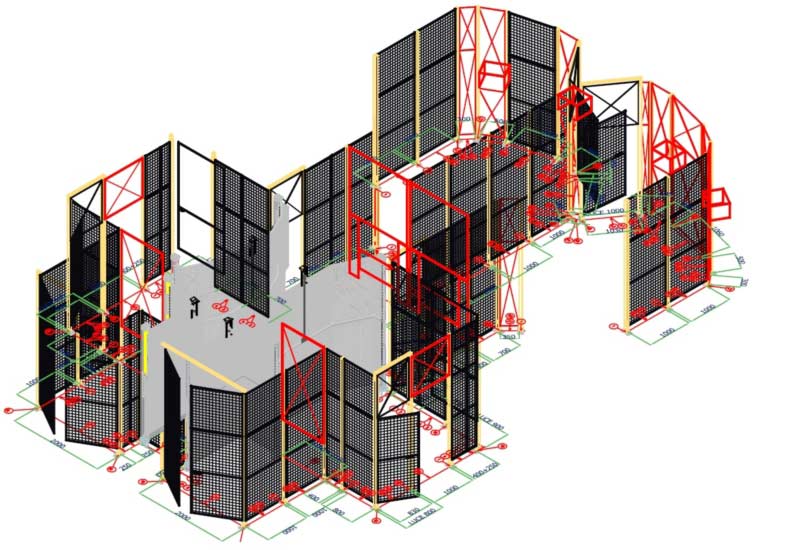
El diseño se ha enviado al cliente para que lo apruebe tras el procesamiento gráfico realizado con el software específico de Accessafe, con el que puedes comprobar cómo funciona la protección gracias a la visualización en 3D, que muestra los componentes de los resguardos móviles, su velocidad y su recorrido de apertura, además del aspecto definitivo de la célula tal y como quedará una vez instalada.
Para alcanzar la altura necesaria, se ha utilizado una protección perimetral de paneles superpuestos de la línea Quadra, con la ayuda de los kits de unión Accessafe combinados con el sistema de fijación imperdible Meta 1, altura de 3 metros, sección de 60×60, base soldada DBS y resistencia a la deformación según la norma UNI EN ISO 14120.
Para las zonas semilibres destinadas a la carga y descarga, se han diseñado cuatro puertas neumáticas con apertura deslizante vertical totalmente especiales, que cumplen la norma UNI EN ISO 13849 y alcanzan el Nivel de Rendimiento D, con las siguientes características:
- Estructura portadora de 80 x 60 mm en forma de «L» y de «C»
- Cilindro neumático central
- Contrapesos de seguridad
- Guías lineales de recirculación de bolas
- Doble revestimiento de policarbonato y malla antifalanges
- Interruptores de fin de carrera
- Interruptores para controlar el recorrido adicional
- Sensores de seguridad de borde
- A continuación, el comentario de nuestro cliente:
- Las puertas vienen con un certificado de incorporación y un dossier técnico con los manuales de uso y mantenimiento en el idioma de destino del suministro, que en este caso es el español.
El comentario de nuestro cliente tras la instalación:
«GFS Gravity srl lleva años colaborando con Accessafe para el suministro de protecciones fijas y móviles que se instalan en sus líneas de colada.
Las soluciones a medida, la rapidez en la intervención y la capacidad de realizar modificaciones incluso mientras el proyecto está en marcha, así como la solidez y fiabilidad de las soluciones propuestas, han convertido a Accessafe en nuestro socio de referencia en este ámbito. En concreto, para nuestra nueva instalación en México, las puertas correderas verticales que hemos puesto nos han permitido crear una célula muy flexible (con la posibilidad de excluir una máquina del ciclo sin dejar de trabajar con la otra) cumpliendo con los requisitos de seguridad que exigen las normativas más recientes».